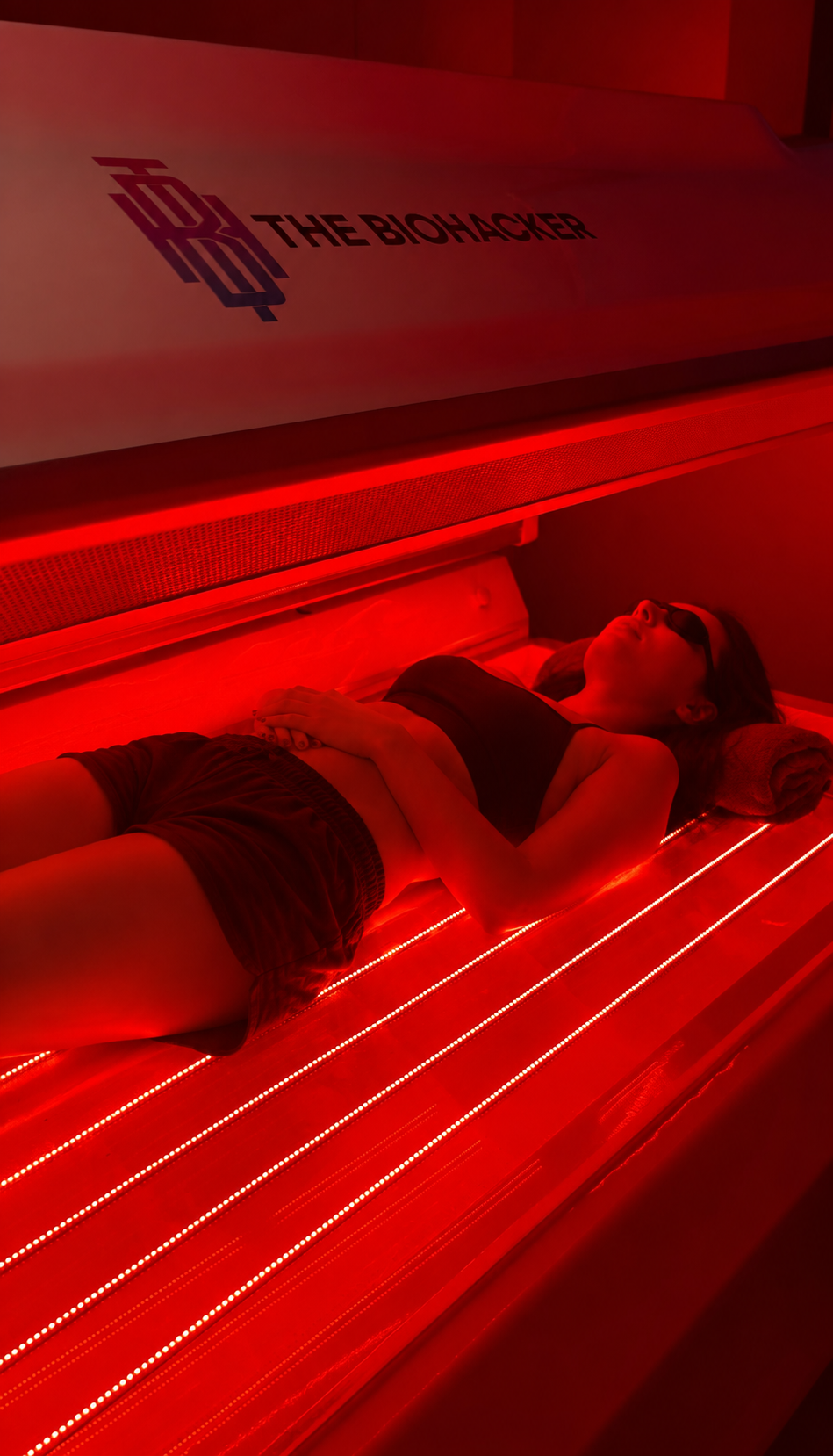

Photobiomodulation Therapy (Red Light Therapy)
Photobiomodulation Therapy is a non-invasive light-based treatment that uses medically calibrated wavelengths—primarily red (630–660 nm) and near-infrared (810–850 nm)—to influence cellular function. These wavelengths penetrate tissues and are absorbed by mitochondrial photoreceptors, affecting cellular signalling, oxygen utilisation, and the biochemical pathways responsible for ATP (energy) production.
Modern PBMT systems also incorporate blue, green, and multi-spectrum light, each interacting with the body in distinct ways:
Blue Light (around 450 nm):
Acts on surface-level structures, influencing microbial activity, skin integrity, and superficial tissue responses.
Green Light (around 520–560 nm):
Interacts with dermal and sub-dermal photoreceptors, influencing vascular behaviour, pigmentation modulation, and balancing photobiological responses.
Red Light (630–660 nm):
Targets mid-depth tissues, supporting mitochondrial activation and cellular metabolism.
Near-Infrared Light (810–850 nm):
Penetrates deeper layers, interacting with neural, muscular, and connective tissues to modulate cellular oxygen dynamics and intracellular signalling.
PBMT is widely used in regenerative and performance medicine due to its ability to modulate mitochondrial pathways, influence oxidative balance, and optimise cellular efficiency without heat, UV radiation, or tissue damage.
The therapy works through precise control of light parameters—wavelength, intensity, frequency, and exposure duration—ensuring accurate, consistent, and targeted intracellular activation.